Raquel Valdepenas, BSN, RN, CNOR: No financial relationships to disclose
Harold Tamayo: No financial relationships to disclose
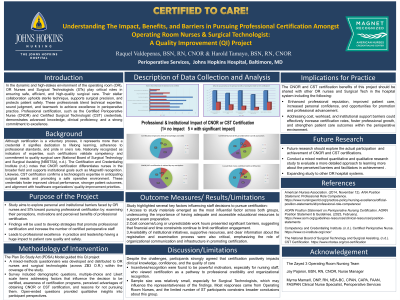
Description: ABSTRACT The Certified to Care study is quality improvement initiative aimed to increase the certification rate among perioperative nurses (CNOR) and surgical technologists (CST) in the Operating Room . Certification affirms specialized expertise, boosts confidence, and garners formal recognition. Through awareness campaigns, review support, incentives, and visible recognition efforts, the plan sought to foster a culture valuing certification and professional growth.
BACKGROUND Certification, such as CNOR for nurses and CST for surgical technologists, is an established method to demonstrate advanced competence within perioperative practice. Recognized benefits include elevated earning potential, greater opportunities for advancement, increased credibility and confidence, higher job satisfaction, and personal fulfillment. Despite these benefits, certification rates often lag due to lack of awareness, competing demands, and limited institutional support.
Methods: The implementation strategy comprised the following activities: Awareness and Education: Development of materials and sessions highlighting certification benefits and pathways. Take 2 Program: Eligible staff were encouraged to take certification exams with review support and a second-chance option. Resource Provision: Access to high-yield review materials was expanded for all eligible staff. Incentive: Certified surgical technologists received improved salaries, and all certified personnel were recognized with a certified ID badge and names displayed on a plaque. Motivational Campaigns: The "Magnet Strong" and "Pride of Certification" initiatives bolstered institutional and personal motivation. Dedicated Oversight: A certification board guided progress, addressed barriers, and tracked outcomes.
Patient Outcomes: Lower rates of falls. Lower incidence of surgical infections Prevent risk of developing pressure injury. Prevent occurrence of surgical sentinel events.
Organization Outcomes: Promotes retention Decrease vacancy and turn over rate. Increased number of committed surgical technologist and operating room nurses.
Result: Following implementation, the initiative achieved the following outcomes: Certification Rate: The proportion of certified nurses and surgical technologists increased, trending towards the 55% target. Engagement Metrics: Staff participation in review sessions and the Take 2 program rose markedly. Qualitative Outcomes: Participants reported increased confidence, satisfaction, and a sense of professional pride. Organizational visibility of certification improved, as evidenced by engagement with recognition programs.
Conclusion: A structured and multifaceted intervention successfully fostered a culture that values certification among perioperative nurses and surgical technologists. Key drivers included targeted awareness, meaningful incentives, and public recognition. Sustained gains are likely if such supportive measures continue, offering a replicable model for other departments seeking to advance professional standards.