Perioperative Nurse Educator Houston Methodist Hospital Houston, Texas, United States
Disclosure(s):
Jenell Moultrie, MSN, RN, CNOR: No financial relationships to disclose
Description: Description of Team: Our current pressure injury prevention team includes members from all perioperative areas (preoperative, intraoperative, PACU), procedural areas, wound care specialists, and quality representatives. Since 2020, we have tracked pressure injury occurrences and developed interventions. To systematize this process, we plan to involve similar stakeholders from other facilities in the system, as well as IT professionals and leadership.
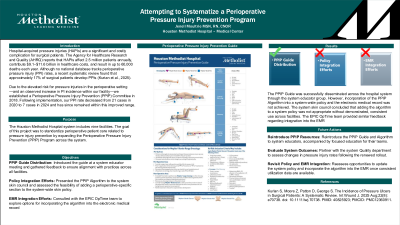
Preparation and Planning: The Houston Methodist Hospital system is a large academic network comprising nine member hospitals. Currently, Houston Methodist Main Campus is the only facility with a comprehensive perioperative pressure injury prevention program. We began tracking pressure injury rates in 2020 and have achieved a consistent annual reduction — for example, the perioperative pressure injury rate decreased from 21 in 2020 to 7 in 2024. This success was driven by an evidence-based perioperative pressure injury prevention algorithm and a visual guide. Based on the program's effectiveness, our goal is to expand it system-wide. A key objective is integrating the algorithm into the electronic medical record (EMR) to promote ease of use.
Implementation:
Obtain buy-in for the pressure injury prevention (PIP) algorithm and guide from other system facilities by presenting the information to system perioperative educators and providing digital and physical copies of the reference guide.
Collaborate with the system education team to develop training to familiarize perioperative teams with the new interventions.
Once standardized practice is established system-wide, work with the policy and procedures committee to incorporate necessary elements into existing pressure injury prevention policies.
Partner with EPIC IT to integrate the PIP algorithm into the EMR.
Educate perioperative teams about the EMR updates.
Outcomes: Compliance with the PIP algorithm and guide is expected to reduce pressure injury rates throughout the system.
Assessment: To our knowledge, Houston Methodist Main Campus is currently the only facility tracking perioperative pressure injury rates. Other facilities will need to establish baseline NDNQI/PSI03 data to allow for pre- and post-implementation comparisons.
Implications for Nursing: Standardization benefits nurses by embedding a consistent process into daily practice. Providing information in the EMR or as a visual guide reduces human errors that can arise from various causes. Ultimately, this will create a safer environment for patients across the system.