ANTONIA OLIVA LOPEZ, COL 4232: No financial relationships to disclose
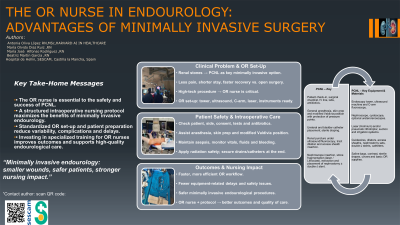
Description: 1. Clinical Problem/Importance: Renal lithiasis is prevalent, often requiring surgical intervention. Percutaneous nephrolithotomy (PCNL) is a minimally invasive endourological procedure for large renal calculi, offering benefits like reduced surgical time and faster recovery. Its complexity demands specialized intraoperative nursing care to ensure patient safety and optimal outcomes. Nurses are crucial for efficient, safe procedures.
2.
Background: Modern healthcare emphasizes evidence-based practice. Effective perioperative nursing for PCNL, encompassing meticulous OR and patient preparation, plus strict safety protocols, is fundamental. This poster outlines an evidence-based approach to standardize intraoperative nursing interventions for PCNL.
3. Clinical Question: What are the essential intraoperative nursing interventions for preparing the operating room, ensuring patient safety/readiness, and optimizing the surgical environment during percutaneous nephrolithotomy procedures?
4. Description of Evidence-Based Protocol: Our protocol systematically addresses intraoperative nursing care in PCNL:
Patient Preparation: Involves thorough check-lists, confirming consents and blood availability. Antibiotic prophylaxis (e.g., Cefotaxime/Ciprofloxacin) is administered. Skin preparation includes chlorhexidine wash/paint. Crucial is the modified Valdivia positioning: patient positioned with affected kidney elevated by an air-filled bag (3000ml saline bag) between iliac crest and 12th rib, ensuring optimal renal access. Nurses manage patient warming and DVT prevention (stockings/compression). Initial ureteral catheterization followed by Foley insertion completes preparation.
Surgical Safety Measures: Strict aseptic technique maintained via sterile draping (urological collecting sheet), consistent "Time Out" surgical check-lists, and vigilant fluid balance monitoring during continuous irrigation. Radiation safety (lead aprons) with fluoroscopy, and meticulous device management (lithotriptor, laser) are ensured. Continuous physiological monitoring and proper specimen/drainage handling are key.
5. Implementation of an Evidence-Based Protocol: Protocol implementation relies on standardized training for nursing staff, ensuring availability of all resources, strict adherence to check-lists (e.g., WHO Surgical Safety Checklist), fostering strong interdisciplinary team collaboration, and conducting regular audits with feedback for continuous improvement.
6.
Results: (Customize as needed, e.g., Expected Outcomes/Benefits) Expected outcomes include enhanced surgical efficiency by reducing setup times and minimizing delays. Significant reduction in complications (e.g., infections, positioning injuries) is anticipated through meticulous care. Overall, improved patient safety, optimized resource utilization, enhanced team communication, and standardized high-quality care are expected benefits from applying this protocol.
7. Conclusions/
Discussion: This detailed protocol for intraoperative nursing care in PCNL highlights the critical role of nurses in ensuring patient safety and surgical success. It streamlines activities, reduces variability, and minimizes errors through systematic OR and patient preparation, combined with stringent safety measures. Adherence to this evidence-based approach is fundamental for optimal outcomes in endourological renal lithotripsy.