Staff Educator Newyork Presbyterian Queens Hospital Valley Stream, New York, United States
Disclosure(s):
Rizza St Louis, BSN, RN, CNOR: No financial relationships to disclose
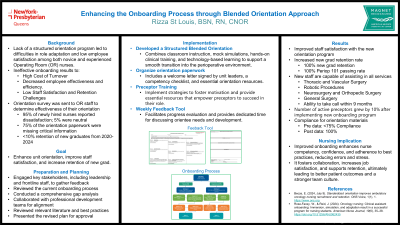
Description: Perioperative roles and responsibilities present both mental and physical challenges for novice and experienced staff alike. While a foundational workflow exists, variations in care arise due to differences in surgical procedures. Trainees often struggle to fully grasp the multifaceted nature of perioperative roles, particularly when transitioning between services. Successfully adapting to these changes requires a clear understanding of their responsibilities and the critical role they play in ensuring seamless patient care. Trainees in Preop Holding and the Post Anesthesia Care Unit (PACU) must navigate the process of patient admissions and discharges while adhering to service-specific guidelines. The transition from one phase to another whether preparing a patient for surgery or ensuring their safe discharge demands a thorough understanding of protocols that can vary significantly between services. Similarly, operating room trainees face challenges as they adapt to different services and surgical teams. Navigating procedural requirements, accommodating attending physicians' preferences and utilizing specialized instruments and equipment can feel overwhelming. While hospitals adhere to universal guidelines, specific protocols may vary across institutions. This learning curve impacts both novice and experienced trainees. Regardless of experience level, trainees encounter challenges of varying intensity. Mastery of perioperative tasks requires adaptability, attention to detail, and a deep commitment to understanding the complexities of patient care in a surgical setting. A tailored orientation program whether focused on skill development, expanding knowledge or combination of both has shown improve outcomes. Much like an introductory program or 101 course, a blended orientation approach combining classroom instruction, mock simulations, hands-on clinical training and the use of technology and computer-based learning has proven effective in easing the transition of trainees into the perioperative environment. This approach enhances confidence, skill development, competency, job satisfaction and retention rates. By integrating educational content alongside hands-on training, healthcare organizations can optimize resource utilization while fostering a more confident and well-prepared perioperative team.