Manager of Perioperative Professional Development Northeast Georgia Health System Gainesville, Georgia, United States
Disclosure(s):
Sierra M. Vasquez, MSN-Ed., RN, CNOR: No financial relationships to disclose
Description: Description of team: Clinical Educators, Professional Development Manager, Clinical Competency Manager, Surgical Services and Clinical Executive Leadership
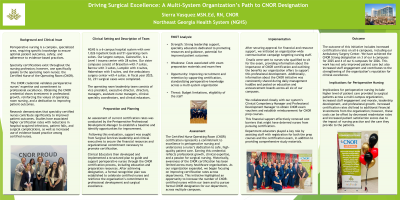
Preparation and planning : 1) Assessment of our current certification rates, which was managed by our Clinical Competency Manager. 2) Seek leadership support within Surgical Services and Clinical Executive (financial and resources) 3) Clinical Educators devised a plan to support team nurses through the process. 4) Once we reached designation, develop a recognition plan.
Assessment: The Certified Nurse Operating Room (CNOR) certification represents a commitment to excellence in perioperative nursing and underscores a nurse's dedication to safe, high-quality patient care. Earning this credential reflects professional growth, clinical expertise, and a passion for surgical nursing. Historically, awareness of the CNOR certification has been limited across many healthcare organizations. As our organization expanded, we began focusing on improving certification rates across departments. This initiative highlighted an opportunity to increase the number of CNOR-certified nurses within our team and to pursue formal CNOR designation for our department, across multiple campuses.
Implementation: After securing approval for financial and resource support, we initiated an organization-wide communication campaign targeting nursing staff. Emails were sent to nurses who qualified to sit for the exam, providing information about the importance of the CNOR certification and outlining the benefits our organization offers to support this professional development. Additionally, information about the CNOR initiative was consistently shared during daily management huddles and posted on education and announcement boards across all six of our campuses. We collaborated closely with our system's Clinical Competency Manager and Professional Development Manager to obtain CNOR exam vouchers and establish reimbursement for CNOR prep courses. This financial support effectively removed cost barriers that might have deterred nurses from pursuing certification. Department educators played a key role by assisting staff with registration for both the prep courses and the certification exam, in addition to providing comprehensive study materials.
As nurses successfully earned their CNOR certification, we celebrated their achievements through various channels, including tiered huddles, formal organizational recognition, and dedicated celebrations at each campus once we attained the CNOR Strong designation.
The outcome of this initiative includes increased certification rates on all 6 campuses, including our Ambulatory Surgery Center. We have achieved the CNOR Strong designation on 3 of our 6 campuses as well. This work has not only improved patient care but also increased staff engagement and contributes to the strengthening of the organization's reputation for clinical excellence.
Implications for perioperative nursing include higher level of patient care provided to surgical patients across a multi-campus organization, increased staff engagement and morale, leadership development, and professional growth. Increased certification rates did lead to additional financial investments from the organization, however, these costs can be offset by decreased readmission rates and increased patient satisfaction scores due to the impact of the nursing practice and the care they provide to the patients.