Registered Nurse - Nurse Navigator Parkland Health System DALLAS, Texas, United States
Disclosure(s):
Michael Gregory Jeter, CNOR CNAMB CAPA DEI: No financial relationships to disclose
Description:
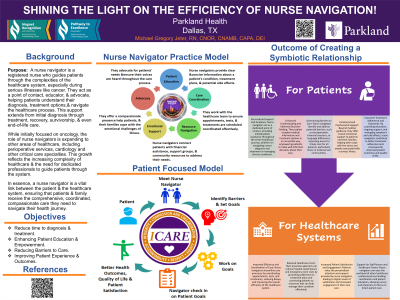
Background: The evolving healthcare landscape, marked by complex chronic conditions and disconnected care pathways, necessitates innovative models of care to optimize patient outcomes. Patient navigation, particularly the nurse navigator role, addresses these challenges by providing personalized support and guidance throughout the patient journey.
Purpose: These abstract aims to synthesize the evidence supporting the Nurse Navigator role in improving care coordination, patient education, and patient experience across various healthcare settings.
Methods: A comprehensive literature review was conducted across relevant databases (e.g., PubMed, CINAHL, Scopus) to identify studies focusing on the nurse navigator role and its impact on patient care. Studies of various methodologies were included, with a focus on those demonstrating measurable outcomes related to patient satisfaction, disease management, and timely access to care.
Results: Existing research highlights the significant benefits of nurse navigator programs, including: - Improved Patient Experience: Increased patient satisfaction with the healthcare system and reduced distress. - Enhanced Care Coordination: Improved communication between healthcare providers and facilitating smoother transitions of care, particularly post-discharge. - Better Patient Education: Increased patient understanding of their condition, treatment options, and self-management strategies. - Timeliness of Care: Reduction in the time elapsed from diagnosis to the start of treatment. - Increased Completion of Care Services: Higher rates of appointment attendance and completion of recommended interventions. However, some barriers exist, such as a lack of understanding of the role, overwhelmed nurse navigators, and inefficient healthcare system workflows.
Conclusions: Nurse Navigators significantly improve patient outcomes and experiences by fostering care coordination, enhancing patient education, and providing emotional support. This role is vital in navigating complex healthcare systems and addressing health inequities. Further research is warranted to explore the role's expansion into new settings and optimize its implementation to ensure program sustainability and scalability.