Nurse Manager Northeast Georgia Medical Center Cornelia, Georgia, United States
Disclosure(s):
Lisa A. Hunnicutt, RN: No financial relationships to disclose
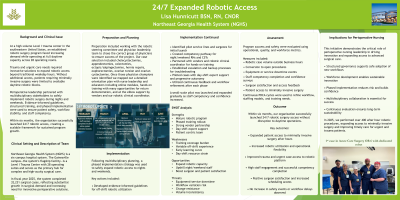
Description: At a busy level one trauma center in the southeastern United States, an extremely efficient robotic program wanted to accommodate increased robotic surgical volume and offer patients the benefits of robotic surgery outside of regular business hours. The benefits of robotic surgery include a minimally invasive surgical approach, decreased pain post-operatively, early return to activities of daily living, and decreased length of stay. The operating room had already maximized operational efficiency for 28 operating rooms and there was minimal open robotic availability to offer Trauma Acute Care Surgery. The only option to meet demand was to expand robotic access beyond 7 a.m. to 7 p.m. during the week and to allow robotic cases on the weekend. The Robotic Steering Committee met to discuss guidelines for establishing night and weekend access for robotic cases. The group identified a select list of surgeons who would be allowed to initiate a soft launch, decided which specific procedures could be performed, and discussed the details of training the night and weekend staff to learn robotics. The nursing leaders planned to support the night and weekend teams experiencing an initially low volume of cases, with an extensive training plan by partnering with Genesis and implementing a "robotic scrub expert." This poster discusses how an engaged robotic steering committee provided 24/7 expanded access to the robot to meet high volume surgical demands through an established training plan and implemented it in a six-month period.