Perioperative nurse AACD sao paulo, Sao Paulo, Brazil
Disclosure(s):
camila Paladino, manager: No financial relationships to disclose
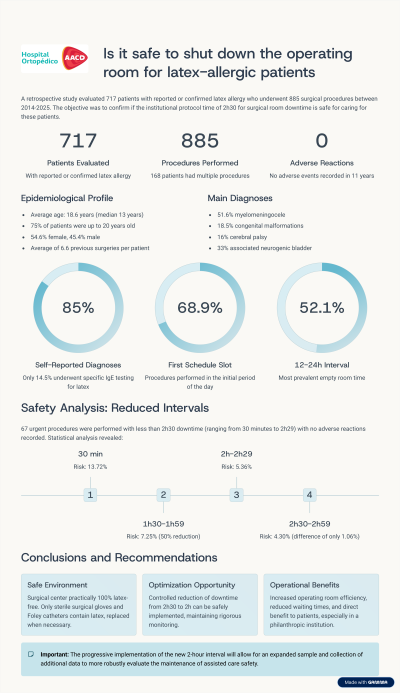
Description: Latex allergy remains a major concern in operating rooms as a cause of potentially serious reactions. Latex allergy cannot currently be cured; prompt diagnosis and management can significantly reduce the risk of more serious reactions. Reports of latex allergy began to become more consistent in the 1980s, with a sharp increase in the number of cases in the 1990s due to the large number of surgical materials containing latex allergens. The American Society of Anesthesiologists guidelines recommend that high-risk patients be scheduled for the first surgical appointment. This can cause problems, including delayed surgery, increased discomfort, and additional financial costs. In contrast, the Australasian Society of Clinical Immunology and Allergy guidelines (March 2010) suggest that this specific schedule is ineffective when all powdered latex gloves are removed from the operating room and replaced with powder-free low-protein latex or synthetic gloves. However, evidence is limited to confirm the safety of this approach in a surgical setting. 2. OBJECTIVES To confirm whether the institutional protocol of 2.5 hours of room downtime is safe for treating patients with latex allergy and to define the epidemiological profile and prevalence of patients undergoing surgical procedures with reported or confirmed latex allergy. Hypothesis: That room downtime does not impact the safety of treating patients with latex allergy. 3.1) Research Type: Retrospective Observational Study. 3.2) Study location: Conducted in the Surgical Center of a large hospital complex serving public, private, and private medical and hospitals, located in the city of São Paulo, a reference in orthopedics and the treatment of individuals with disabilities. The surgical center has 14 operating rooms and 16 post-anesthesia care beds. It has a total of 75 nursing staff and performs an average of 550 surgical procedures per month. The institution is considered one of the most active orthopedic intervention centers in Brazil. 3.3) Sample description: Patients with reported or confirmed allergies since 2014. 3.4) Inclusion criteria: Patients undergoing surgical procedures with diagnosed or suspected latex allergy in the last 11 years. 3.5) Exclusion criteria: Patients without latex allergy. 3.6) Data Collection Data collection will be performed by researchers using the Tasy system, where they will complete a structured questionnaire in an Excel spreadsheet, collecting personal data, surgical data, surgery time, and the time interval between surgeries when these occur outside the first operating hour. 4. Result: Study in progress, scheduled for completion in December 2025.