Registered Nurse Emory Healthcare Brookhaven, Georgia, United States
Disclosure(s):
Melissa Morehouse, RN: No financial relationships to disclose
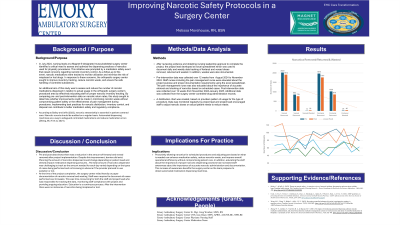
Description: In July 2024, orthopedic ambulatory surgery center nursing leads identified a need to assess the dispensing of narcotics at a large orthopedic center after a medication safety event occurred. This study provides an overview of narcotics dispersed for physiatry procedures and emphasized to the staff a heightened responsibility to maintain control of narcotic inventory. Project leads hypothesized that after delivering education about narcotic inventory tracking and the benefits of adjusting the narcotics retrieved from the medication nurse, there would be an improvement and reduction of narcotics being dispensed. The staff that collected data were the sedation nurses in the procedural area. The study assessed the narcotic medications administered compared to the number of medications being returned to the med room. Unlike many facilities, this surgery center utilizes a medication nurse to distribute opioid medications to staff. Medications were tracked to determine what procedures utilized meds and to what extent. Having too many medications in the nurse's possession created a higher likelihood of misplacing or losing medications. The data was collected from August 2024 to January 2025. A spreadsheet was created to track opioid medications in the procedure area. The goal was to reduce the need and distribution of medications checked out compared to actual usage. Without compromising the safety and well-being of patients and taking into consideration a patient's level of anxiety and pain, is it possible to reduce the number of medications signed out? Medications and procedures along with the physician who performed the procedure were tracked over a 12-week period. (data was collected for 6 months- 12 weeks pre and 12 weeks post intervention). The staff was educated on how to collect and document the data. A distribution chart was created to guide staff on signing out medications, ensuring proper disposal and compliance with regulations. This study demonstrated the importance of tracking narcotic distribution and reducing waste. Data was collected in real time and documented. Data was confirmed with the Controlled Drug Administration Record along with the daily schedule. After reviewing the and analyzing the pre-data, on average, 42% of midazolam and 52% of fentanyl vials were returned at the end of the shift. Post data collected revealed midazolam returned reduced by 1% at 41%, and fentanyl rate of return yielding a 2% drop at 50%. Narcotic medications that were drawn up and not administered were documented as a full waste dose in the data collection process. Fentanyl was wasted at a higher rate (2.3%) compared to versed (1.8%). Further investigation is warranted regarding narcotic waste reduction strategies that could implicate cost saving measures.